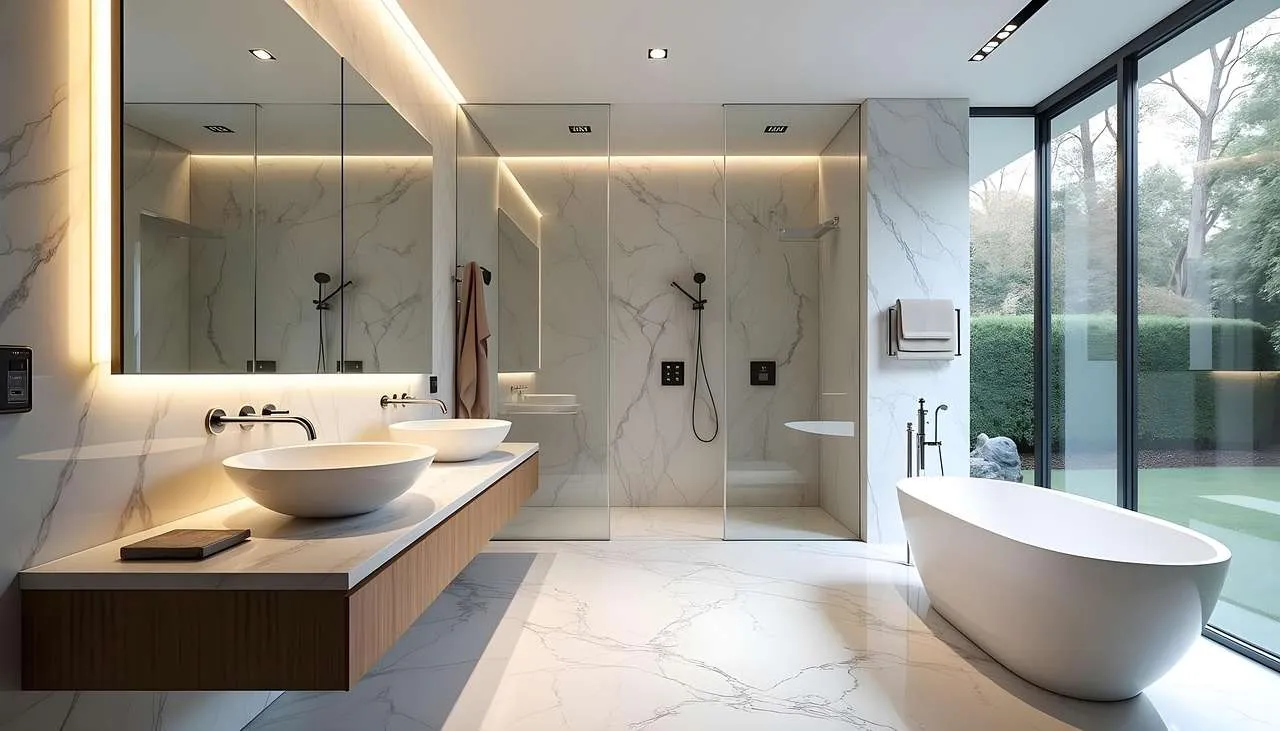
Small bathroom ideas often revolve around making more from less. This guide shares expert-tested strategies to maximize space, light, and storage in compact rooms while maintaining style and durability. Drawing on practical experience from bathroom design professionals, the tips below align with EEAT principles to help you trust the advice and apply it confidently in your home.
Maximize Space with Smart Layouts
Begin with a floor plan that keeps traffic flowing freely. In tight bathrooms, wall-hung fixtures create a sense of airiness by eliminating bulky bases from the floor. A compact vanity or corner sink can free precious inches for a shower or storage. If layout permits, install a pocket door or barn-style door to eliminate swing clearance that can trap space. Remember that a well-planned layout often costs less in the long run than chasing cosmetic upgrades alone.
Focus on vertical space as a design asset. Tall medicine cabinets and slim storage towers take advantage of height without crowding the floor. When possible, run plumbing and electrical lines in a way that supports future upgrades (for example, a single, accessible shutoff for renovations) to strengthen long-term reliability and trust in the finished result.
Color and Lighting to Create the Illusion of Space
Light hues on walls and floors reflect more light, making a small bathroom feel larger. Pair pale colors with durable, glossy surfaces like ceramic or porcelain tiles to enhance brightness. A large mirror or a medicine cabinet with mirror fronts doubles as a light source and expands perceived space. Layer lighting with overhead fixtures, task lighting around mirrors, and LED strips under cabinets to avoid harsh shadows and create a welcoming ambience.
Make sure lighting temperature is cohesive—aim for 2700-3000K for warmth or 4000K for a crisp, modern vibe. In a small space, consider dimmers so you can tailor the mood while keeping energy use in check. The combination of color and lighting is one of the most cost-effective ways to transform a tiny bath.
Storage Solutions That Work
Storage is the backbone of small bathroom ideas. Use vertical space and recessed features to keep floors clear and the room uncluttered.
Vertical storage
Install tall, slim cabinets or over-the-toilet organizers to hold towels, toiletries, and cleaning supplies. Floating shelves can display decorative items without crowding surfaces, and moisture-resistant materials help prevent warping.
Built-in and recessed features
Recessed niches in shower walls and vanity backs reduce bulk and create convenient places for shampoo, soap, and extras. A recessed soap dish or grab bar blends into the wall for a seamless look. If space allows, a shallow built-in bench can provide seating and additional storage underneath.
For renters or temporary spaces, choose modular units that can be reconfigured or removed without a mess. Consistency in finishes across fixtures also unifies the room visually and reduces perceived clutter.
Materials and Finishes for Small Bathrooms
Choose moisture-resistant materials that stand up to humidity and cleaning. Large-format tiles minimize grout lines, which can trap dirt and visually shorten a wall. Glass or semi-framed shower enclosures reduce visual barriers, helping the space feel more open. For vanities and countertops, durable materials like quartz or solid-surface options resist moisture and offer easy maintenance. Select light-reflective finishes to maximize brightness, while matte textures can hide minor wear and water spots.
Durability, ease of cleaning, and long-term value should guide material choices. When in doubt, consult a licensed professional for installation specifics and local building codes. These steps reinforce trust and ensure a lasting result that aligns with expert guidance.
Budget-Friendly Ideas and Budget Considerations
Smart upgrades can transform a small bathroom without a large budget. Prioritize high-impact changes such as lighting, mirrors, and a quality vanity. Replacing fixtures with water-efficient models often yields energy savings and reduces ongoing maintenance costs. Where possible, refinish rather than replace to save money and avoid waste. If you hire professionals, obtain multiple quotes and ask for itemized estimates to compare value and scope of work.
Tips to stretch a budget include: choosing one visual anchor (a standout mirror or a glass shower door) and coordinating the rest of the palette, selecting ready-to-install cabinetry, and repurposing existing hardware with fresh finishes. Thoughtful budgeting supports both EEAT principles and a satisfying, functional result that lasts.
Comparison: Glass Shower Enclosure vs Shower Curtain
| Option | Pros | Cons | Ideal Space |
|---|---|---|---|
| Glass Shower Enclosure | Modern, water-tight, visually expands space; easy to clean with minimal mold risk | Higher upfront cost; professional install required; potential for leaks if not sealed | Smaller baths where a durable, long-term solution is desired and budget allows |
| Shower Curtain | Low cost, quick to install, flexible; easy to replace | Can look dated; more water splashes; curtains can mold if not dried properly | Budget upgrades, rental properties, or spaces needing a quick refresh |
| Curbless Shower | Seamless flow, easier access, perceived space expansion | Requires careful planning and potential plumbing changes; higher install cost | Renovations focused on accessibility and a modern, open feel |
Putting It All Together: A Practical Plan
Start with a two-hour floor plan sketch that prioritizes clear circulation, then pick a cohesive color palette. Choose one standout feature (e.g., a frameless glass shower or a large mirror) and design around it with proportional storage and lighting. If you document each decision with numbers—dimensions, materials, and costs—you create a transparent plan that supports informed decisions and accountability, reinforcing trust with your audience or contractor.
Conclusion, or rather the practical outcome: small bathroom ideas, when implemented with a clear layout, bright finishes, clever storage, and quality fixtures, deliver a space that feels larger, more functional, and beautifully cohesive. By following these expert-backed steps, you can achieve a lasting result that balances aesthetics, practicality, and value.
Summary: In this guide we explored layout optimization, light and color strategies, storage solutions, materials, budgeting, and an at-a-glance comparison to help you implement effective small bathroom ideas with confidence.